
windows sadness and abandonment
Their only daughter married her cousin, the Duke de Bethune-Charost. This last guillotined in 1794, she and imprisoned, the estate was sequestrated in the nation. The young heir succeeded, however, with the help of his tenacious attorney residing Poyanne, seeking annulment of the sale of confiscated property, and arrest of 20 January 1795 reinstated in the ownership of unsold property and paying the price of other already sold.
After the Revolution, she married Eugene de Montmorency, Duc de Laval, whom she brought his property before he died in 1833 without direct heirs.
In July 1813, the short-lived King of Spain Joseph, brother of Napoleon, in his desperate flight after the disastrous Battle of Vitoria, and forced to abandon the command of Marshal Soult, was seeking a stay "rejected "to take refuge. We showed him the castle Poyanne "in a country very withdrawn", then property of Montmorency. After visiting the wounded General Darricau Vitoria and carried home to Dax, he managed to drive Poyanne 17, eight horses, uniformed English, accompanied by a retinue of over one hundred people and a convoy of horses and mules. He settled there and remained "in solitude" for eight days. After paying back his military and he left quietly this shelter on July 24 at five o'clock in the morning to post to campaign, complete with passports issued by the Earl of Angosse, prefect of the Landes, allowing him to join incognito Mortefontaine his land as requested by the Emperor.


The Marquise, granddaughter of Leonardo Baylenx, widow of the Duc de Montmorency-Laval bequeathed the castle to Charles de Talleyrand Perigord, Prince de Chalais, Duke of Perigord and peer France, cousin of her husband.
latter, without ties to the country, immediately sold it in 1834 to M. Moreau de Bellaing, notable and royalist officer native of Hainault, created a baron by Louis XVIII, who lived a few years. After
1848 it was proposed to install a division of the Ecole Polytechnique, and is even said that the Empress Eugenie had the idea to buy into an imperial residence.
The castle was eventually purchased by Leopold Bellaing Moreau, widowed and childless, May 3, 1869 by Father Felipe Gomez, general of the Society of Jesus, from Loyola after the suppression of the Society in 1868 for install the professed house and novitiate of the province of Castile. He then welcomes seventy-two English Jesuits expelled from Spain.
latter, without ties to the country, immediately sold it in 1834 to M. Moreau de Bellaing, notable and royalist officer native of Hainault, created a baron by Louis XVIII, who lived a few years. After
1848 it was proposed to install a division of the Ecole Polytechnique, and is even said that the Empress Eugenie had the idea to buy into an imperial residence.
The castle was eventually purchased by Leopold Bellaing Moreau, widowed and childless, May 3, 1869 by Father Felipe Gomez, general of the Society of Jesus, from Loyola after the suppression of the Society in 1868 for install the professed house and novitiate of the province of Castile. He then welcomes seventy-two English Jesuits expelled from Spain.
They add new buildings to welcome, for eleven years, up to a hundred Jesuits and many novices exiles called the "poyaneos.
After their expulsion in 1881, the castle hosted from 1907 to 1936, the diocesan seminary of Aire and Dax. The Jesuits, however, still owners sold their rights in 1910 to the family of Coyola Monfort who donated to the SA Poyanne in 1936, before it installs the abbey of Benedictine nuns of the Order of St. originating eustasy Diocese of Metz, in the name of Our Lady of Varangeville.
After their expulsion in 1881, the castle hosted from 1907 to 1936, the diocesan seminary of Aire and Dax. The Jesuits, however, still owners sold their rights in 1910 to the family of Coyola Monfort who donated to the SA Poyanne in 1936, before it installs the abbey of Benedictine nuns of the Order of St. originating eustasy Diocese of Metz, in the name of Our Lady of Varangeville.
During the war 39-45, the nuns hid part archives of the Belgian Crown kept in a room walled
The community of Benedictine nuns left the castle Poyanne in 1985. Listed
he was eventually acquired in spring 1988 by the Council of the Landes, which has undertaken the restoration of roofing and siding from 1999 to 2009.

sad state in 1988

north facade restoration in 2008
TOWARDS A REVIVAL AND TOURISM PROMOTION AND CULTURAL MONUMENT OF A MAJOR
LAN OF OF?

soon perhaps?
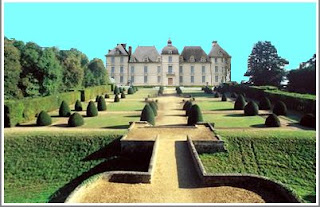
... any personal dream of a fantasy castle ...

The community of Benedictine nuns left the castle Poyanne in 1985. Listed
he was eventually acquired in spring 1988 by the Council of the Landes, which has undertaken the restoration of roofing and siding from 1999 to 2009.

sad state in 1988

north facade restoration in 2008
TOWARDS A REVIVAL AND TOURISM PROMOTION AND CULTURAL MONUMENT OF A MAJOR
LAN OF OF?

soon perhaps?

... any personal dream of a fantasy castle ...

WHY NOT?


0 comments:
Post a Comment